

By Simply Accounts on Feb 5, 2026, 12:30:01 PM
When you start a business, one of the earliest and most impactful decisions you make is choosing your legal structure. This choice determines everything from how you pay tax to the amount of personal risk you face. Often, the decision comes down to a choice between a sole trader and a limited company. To answer what’s the difference between a limited company and a sole trader, we need to look beyond the surface. It’s about balancing simplicity against protection and scale. Ideally, you need clear and straightforward facts so you can choose the structure that best fits your goals.

The Core Difference: Legal Status And Liability
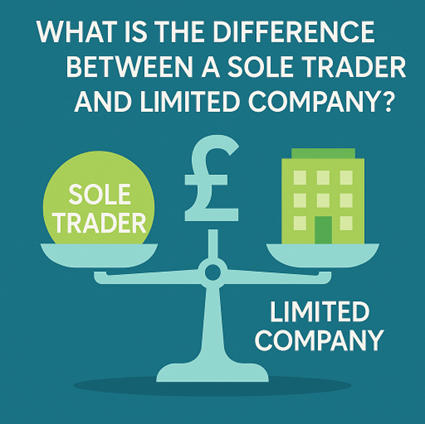
The fundamental difference between a sole trader and a limited company lies in how the law views the business entity itself. This distinction drives almost all the other differences in tax and administration.
1. Legal Status
- Sole Trader: For a sole trader, the individual and the business are legally one and the same entity. There is no separation. You own all the assets, and you are responsible for all the debts.
- Limited Company: A limited company is a separate legal entity. It exists as its own 'person' in the eyes of the law, distinct from its owners (shareholders) and directors. It can enter into contracts, own property and incur debts in its own name.
2. Liability And Risk
This legal status directly impacts the crucial issue of liability:
- Sole Trader: You have unlimited personal liability. If your business incurs debt or faces a legal claim that it cannot pay, your personal assets, your home, savings and car can be used to settle those business debts.
- Limited Company: This structure grants limited liability. The owners’ liability is legally limited, usually to the amount of their shares (often just £1). This means that, generally, the owners' personal assets are protected from the company's debts and financial losses.
If risk is a major concern, perhaps you invest heavily in stock or machinery, the protection offered by a limited company is a huge, stress-reducing factor.
Taxation And Administration: Simple Vs Complex
The structures differ significantly in how they manage tax and administrative burdens. This is where many business owners find the biggest contrast when choosing between a trader or a limited company.
1. Taxation
- Sole Trader: Taxation is simple. The profit the business makes is treated as your personal income. You pay Income Tax and National Insurance via the annual Self Assessment tax return. Your tax liability is determined by your total income, which may include business profits as well as other income streams such as employment income, interest, or dividends. This means your total income affects how much tax you pay and at which rates.
- Limited Company: Taxation is a two-step process, which can be more tax-efficient but is more complex. The company first pays Corporation Tax on its profits. Then, the directors and shareholders pay personal tax (Income Tax and National Insurance) on the money they draw out of the company, typically through a mixture of salaries and dividends.
Getting this mix right requires expert advice, which is where we step in. We help make it clear, straightforward and tailored to ensure maximum tax efficiency.
2. Administration
- Sole Trader: Requirements are much simpler. You must register with HMRC for Self Assessment, keep accurate records of income and expenses, and file one annual tax return.
- Limited Company: The company faces more paperwork and reporting. It must file annual accounts and a Confirmation Statement to Companies House. While the Corporate Tax return is filed with HMRC. This requires stricter adherence to corporate law and accounting standards.
While the limited company has greater administrative requirements, this burden is easily managed by a professional accountant, ensuring you save time and reduce stress.
Perception And Growth: Credibility And Scale
Finally, the structure you choose can influence how clients, suppliers and lenders view your business.
- Perception: While sole traders are respected, a limited company may appear more professional and credible to larger corporate clients and major lenders. The very act of incorporating often signals that a business is serious, established and geared for growth.
- Growth: The limited company structure is typically better suited for scaling up, taking on investment and expanding internationally, due to the clearer separation of finances and ownership through shares.
The choice of sole trader vs limited company is a highly personal one that depends entirely on your circumstances, risk tolerance and growth plans. Are you looking for maximum simplicity and minimal paperwork right now? Or are you focused on scaling rapidly, taking on risk and maximising long-term tax efficiency?
How We Can Help
Here at Simply Accounts, we’re here to ensure our services are customisable and flexible, guiding you through the pros and cons to find the structure that best fits your immediate needs and long-term vision. By partnering with us, you gain human support, not a faceless service, to help you make this crucial decision confidently.

How Do You Become A Limited Company? A Step-by-Step Guide

How To Set Up A Sole Trader Business: A Simple Guide To Getting Started


No Comments Yet
Let us know what you think